

Why is it that the last 10% of a goal often gets finished in a frenzy… while the middle 50% quietly drains our willpower? If you’ve ever lost motivation after an enthusiastic start and then found yourself suddenly sprinting at the end, you’ve experienced the Goal Gradient Effect.
And if you’ve ever stalled halfway through something important, you’ve experienced what motivational scientist Ayelet Fishbach calls the problem of the middle.
Understanding how these two forces interact may be one of the most practical lessons in behavioral science.
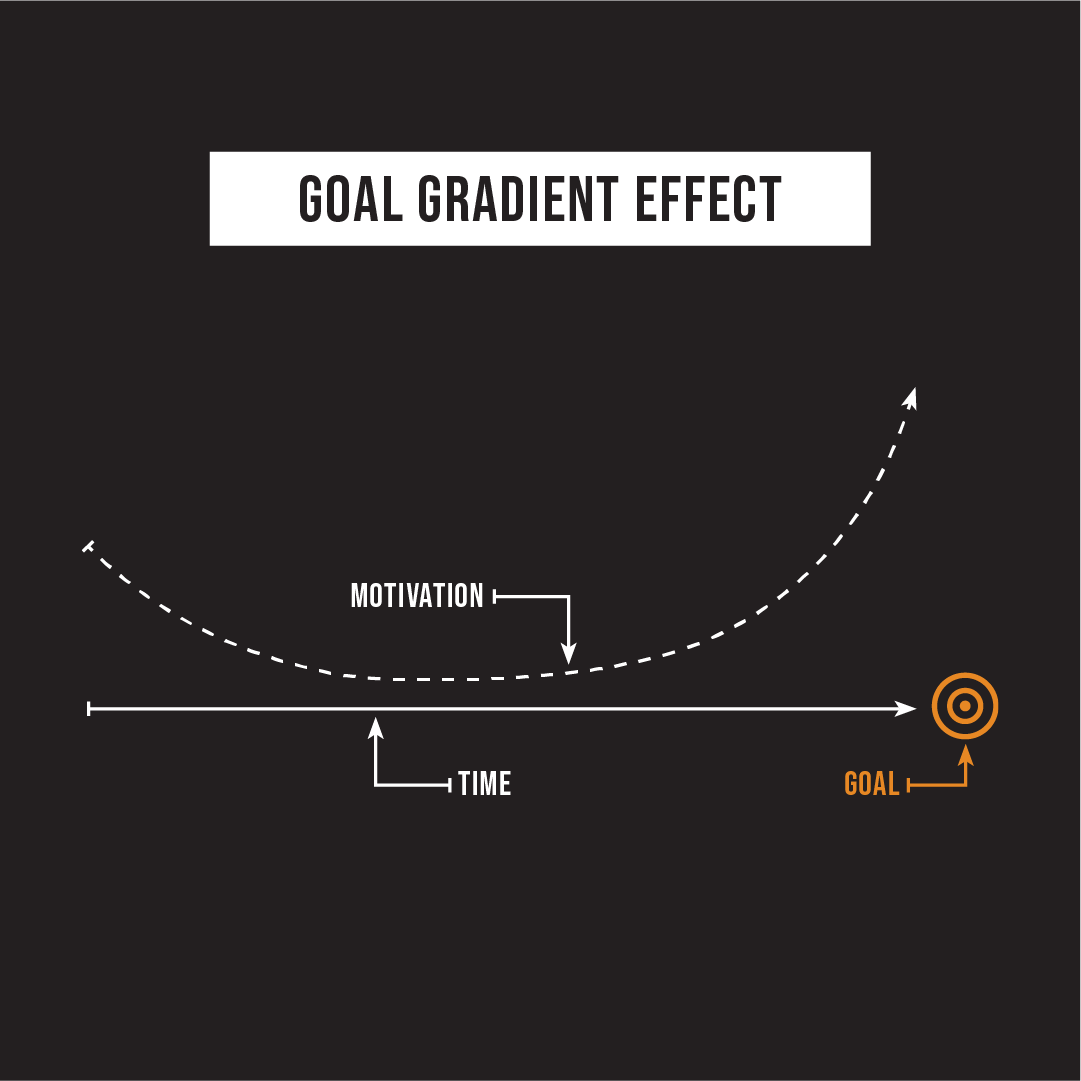
The Science: We Accelerate as We Approach
The Goal Gradient Effect dates back to work by Clark L. Hull in the 1930s. He observed that rats ran faster as they neared food at the end of a maze. Effort increased as distance decreased. Humans tend to act the same.
In a now-classic study, Ran Kivetz and colleagues gave customers coffee loyalty cards. One group received a 10-punch card. Another received a 12-punch card with two punches already stamped.
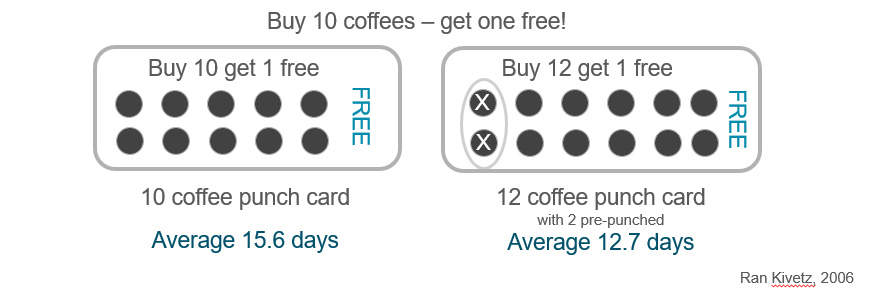
Both required 10 purchases. But those who already had two punches on their card ended up completing the card faster. Why? It felt as if they had been given a “head start.”
Objectively they were identical but psychologically they were very different. Perceived closeness fuels motivation. We don’t just respond to rewards. We respond to how near we believe we are to earning them.
Why Closer Feels More Urgent
Several mechanisms help explain this effect.
- First, proximity sharpens value. Behavioral economics shows that rewards feel more compelling as they move from abstract to imminent. A distant payoff competes with daily distractions. A near payoff commands attention.
- Second, clarity increases action. When a goal is far away, it feels vague. As it gets closer, it becomes concrete. Concreteness reduces cognitive friction.
- Third, anticipation activates dopamine. Motivation spikes not only when we receive rewards but also when we expect them. As the finish line comes into view, anticipation intensifies—and effort follows.
All of this creates a predictable pattern: enthusiasm at the start, acceleration at the end. And something else in the middle…
Where Motivation Goes to Die: The Middle
In her work and public conversations, including insights she shared with us on The Behavioral Grooves Podcast, Ayelet Fishbach describes a consistent motivational dip during goal pursuit.
The beginning is energizing. Identity shifts feel exciting. There is potential and optimism abundant at the start of a project.
The end is urgent. Completion feels tangible. Social recognition and self-satisfaction are within reach as you get nearer the final finish line.
But the middle? The middle is repetitive. Effort feels routine. The reward still feels distant, yet the novelty has worn off.
This is the problem of the middle. People don’t abandon goals because they lack ambition. They abandon them because the psychological return on effort temporarily declines. The Goal Gradient Effect explains the sprint. Fishbach’s work explains the stall.
How to Design Around the Dip
If we know that motivation dips midstream, we can design for it. One of Fishbach’s key insights is that the framing of progress should shift over time. Early in pursuit, focusing on commitment (i.e., why the goal matters) strengthens identity and direction.
Later in pursuit, highlighting accumulated progress (i.e., how far you’ve come) boosts momentum.
But in the middle, neither works automatically.
So... how do we overcome this? We can re-segment the goal. We talked about this in an earlier article on breaking down Keystone Goals . By breaking a long horizon goal into shorter arcs, you end up creating new “ends.” Each milestone becomes a mini-finish line, triggering fresh gradient effects.
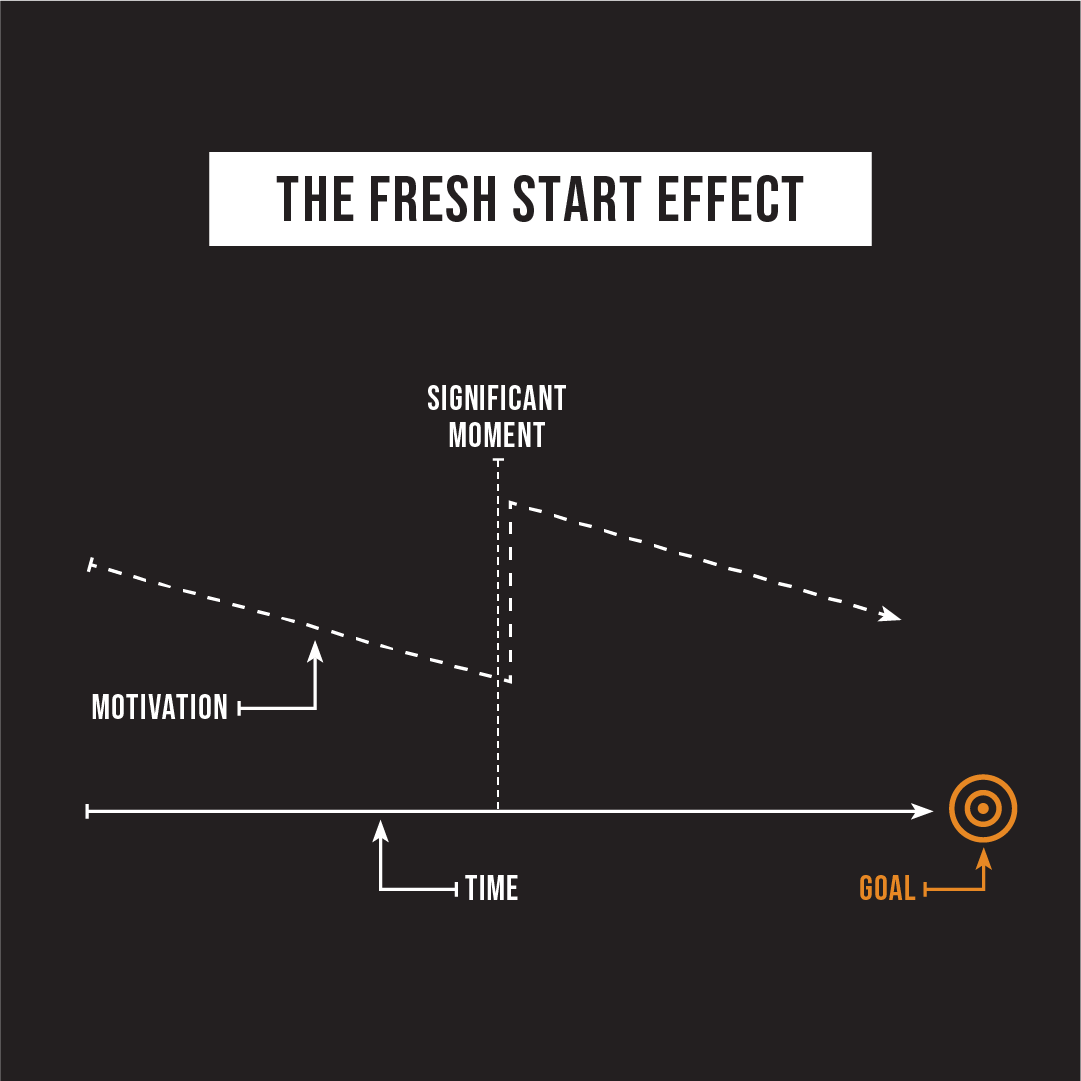
Visible tracking matters here. Progress bars, streak counts, milestone check-ins, and journal reflections are tools that tools convert abstract distance into visible movement.
The coffee card study wasn’t about caffeine. It was about psychological proximity.
When the goal feels closer, effort rises.
The Hidden Lever: Perception
Perhaps the most important lesson is this: Motivation is not purely about actual distance to a goal. It is about perceived distance. Two people can be equally far from finishing a book, launching a product, or improving their health. But, the one who interprets their progress as meaningful will accelerate while the one who sees only remaining effort will stall.
Fishbach’s research shows that focusing attention on completed actions can restore drive—particularly later in pursuit. But early on, thinking too much about progress can ironically lead to complacency. Timing matters.
Motivation is dynamic. The message that fuels you on day one is not the message that sustains you on day sixty.
A Practical Exercise
Review a goal you are working on right now. Are you at the beginning, the middle, or near the end?
- If you are near the end, lean into progress. Let the anticipation pull you forward.
- If you are at the beginning, reconnect with purpose. Clarify why it matters.
- If you are in the middle—the hardest place—create a new ending. Define a milestone that feels close enough to chase.
We don’t just move toward goals, we accelerate when we believe we are almost there.
And sometimes, the difference between quitting and finishing is simply making “almost there” visible sooner.
And keep on shifting.
Stuck on your goals? Try our behavior change products. Use code SUBSTACK10 for 10% off at checkout.
This Week’s Shift
A weekly reminder to rethink, reflect, and act:
Have you abandoned a goal in the middle dip? Try it again with the tips above!
Listen
Go deeper into this week’s topic:
Thoughtful Reads
Curated ideas to inspire reflection:
Psychology of Super Ads (2023)
Every week in Behavior Shift Weekly, we share ideas grounded in behavioral science and psychology, practical tools to help you think differently, act intentionally, and build the life you actually want.
References
-
Hull, C. L. (1932). The goal-gradient hypothesis and maze learning.
-
Kivetz, R., Urminsky, O., & Zheng, Y. (2006). The goal-gradient hypothesis resurrected: Purchase acceleration, illusionary goal progress, and customer retention. Journal of Marketing Research.
-
Fishbach, A. (2022). Get It Done: Surprising Lessons from the Science of Motivation.
-
Fishbach, A., & Dhar, R. (2005). Goals as excuses or guides: The liberating effect of perceived goal progress on choice. Journal of Consumer Research.